
The Gastrointestinal Microbiome's Effect on Cancer: What Does the Evidence Say?
Educational research summary, not medical advice. Talk with your oncologist and pharmacist before starting, stopping or changing any treatment or supplement.
Long before I ever became interested in the relationship between intestinal bacteria and cancer, I became interested in probiotics for a much simpler reason: I watched them help some very sick patients. Over my 30 years in family medicine, I diagnosed exactly 25 patients with Clostridioides difficile, commonly called C. difficile or C. diff. It is an intestinal infection that can cause relentless diarrhea, abdominal pain, dehydration and, in severe cases, life-threatening inflammation of the colon.
At the time, the standard treatments were powerful antibiotics, mainly metronidazole and oral vancomycin. These often bring their own significant side effects, including nausea, abdominal discomfort and diarrhea—the last things a patient already suffering from severe intestinal illness wanted to experience. That was part of what troubled me. We were treating a disease defined by a profoundly disrupted intestinal ecosystem with still more antibiotics, which has the capacity to disrupt it even further.
I began to wonder whether there might be another way to help restore that ecosystem rather than further disrupt it. That’s what led me to try a different approach. In my three decades of clinical experience, I treated those 25 C. diff patients with probiotics instead of antibiotics. Instead of combatting virulent gut bacteria directly with a bacteria-killing medicine, why not support the healthy gut bacteria to regenerate balance? Twenty-four of the 25 experienced complete resolution.
That was my personal clinical experience, not a randomized clinical trial. However, when you’ve watched people suffering from severe gastrointestinal disease improve after deliberately changing the bacteria in their intestines, you tend to pay attention when researchers begin asking whether that same enormous community of microorganisms might affect diseases far beyond the intestine.
And that brings us to cancer.
We Are Not Alone Inside Our Own Bodies
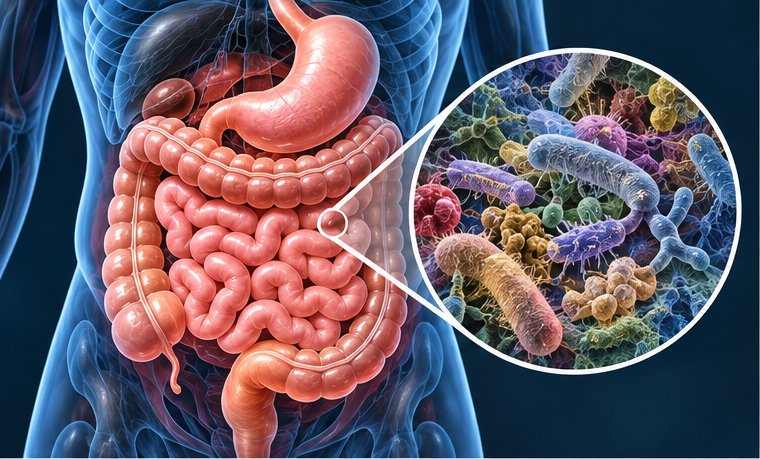
Our intestines contain trillions of bacteria and other microorganisms. Collectively, this community is called the gastrointestinal microbiome. For many years, we thought of most of these organisms as passengers. We now know better.
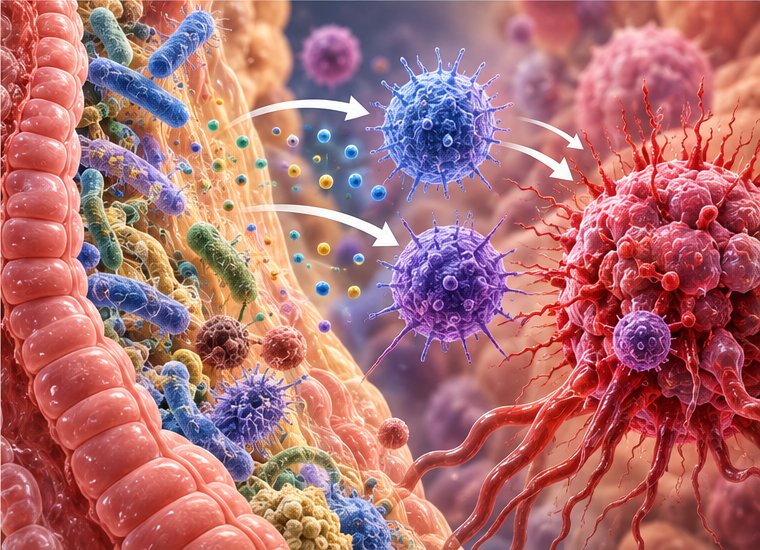
They produce chemicals that enter our circulation. They communicate with immune cells. Some impact inflammation. Some manufacture substances such as butyrate that influence immune function.
This is critical in cancer because our immune system is one of the body’s primary defenses against invaders and malignant cells.
So researchers began asking a fascinating question: Could the organisms living in our intestines influence whether cancer develops, how aggressively it behaves, or even whether cancer treatment works? The evidence is becoming increasingly difficult to ignore.
An 82 Percent Difference That Got My Attention
A 2026 study published in Technology in Cancer Research & Treatment compared the intestinal bacteria of people with aggressive cancers with those of people without cancer. The difference was extraordinary.
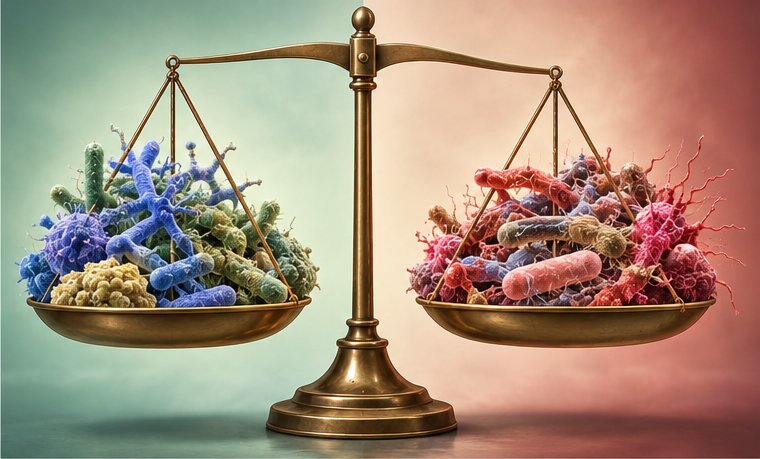
Patients with aggressive cancers had approximately 82 percent less Bifidobacterium in their intestines.
The aggressive-cancer group also had approximately 36 percent less Faecalibacterium and 74 percent less Collinsella.
The Bifidobacterium difference was particularly unlikely to have occurred simply by chance according to the researchers’ statistical analysis.
Those are striking numbers. But they do not prove that losing Bifidobacterium causes cancer nor that consuming it eradicates it.
In fact, there was a major problem with this particular study: the patients with aggressive cancers were, on average, about 25 years older than the control group. Age itself can affect the microbiome. There are other possibilities. Did cancer alter their intestinal bacteria? Did chemotherapy do it? Did antibiotics? Did changes in diet associated with illness change the microbiome? Just because you pass a stop sign on the way to an accident in the interaction, that does not mean the stop sign caused the accident.
In the same way, finding different bacteria in people with cancer doesn’t tell us whether those bacteria contributed to the cancer or whether the cancer, its treatment, or something else changed the bacteria.
So researchers needed something stronger.
What Happened When Scientists Changed the Bacteria?
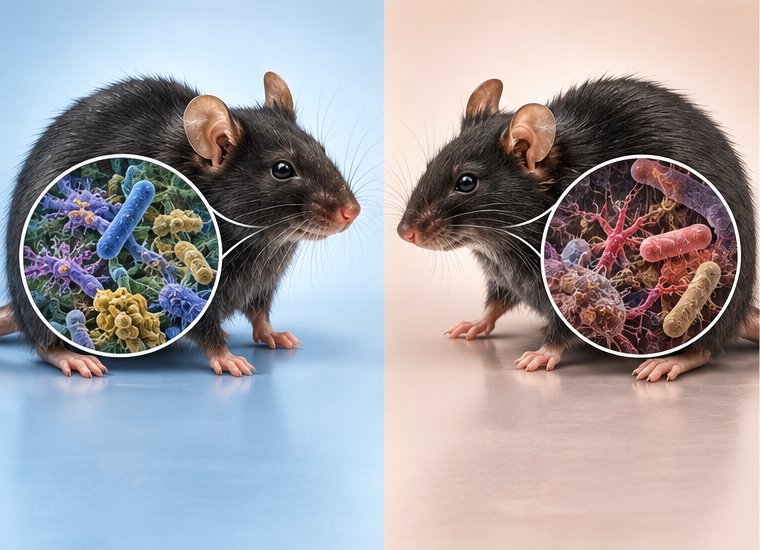
In 2015, researchers at the University of Chicago published a fascinating experiment in Science involving melanoma. They discovered that genetically similar mice could have remarkably different immune responses to melanoma depending upon the bacteria living in their intestines.
Then they changed those bacteria. One group of organisms stood out: Bifidobacterium.
Giving the mice Bifidobacterium improved their immune system’s ability to recognize and attack the tumors.
Even more interestingly, Bifidobacterium appeared to make an important type of cancer immunotherapy work better.
Immunotherapy deserves a quick explanation. Cancer cells are remarkably good at hiding from the immune system. Some modern cancer drugs work by neutralizing the biological “shield” that cancer uses to prevent immune cells from attacking it. These drugs help take expose the cancer to the immune system so it can attack cancer.
In the mouse experiment, changing the intestinal bacteria helped that immune attack.
But mice aren’t people. The obvious question was whether anything similar happens in human beings.
Cancer Patients Who Respond to Immunotherapy Have Different Gut Bacteria
Researchers subsequently began examining the intestinal bacteria of people receiving cancer immunotherapy. Again and again, they found differences between patients whose cancers responded and patients whose cancers didn’t. Bifidobacterium appeared repeatedly. So did other organisms, including Faecalibacterium and Akkermansia.
A pattern was emerging. The ecosystem inside the intestine appeared to be related to what was happening inside the tumor.
Then researchers performed an experiment that, in my opinion, changed the conversation completely.
What If You Give a Non-responder the Microbiome of a Responder?
Imagine having metastatic melanoma. You have received one of the great advances in modern cancer treatment—immunotherapy—but your cancer has stopped responding. What would you be willing to try?
Most of the options medical providers utilize have high rates of toxicity and side effects. Researchers asked whether part of the problem might be hiding in the intestine, potentially with relatively innocuous probiotic remedies.
They identified melanoma patients who had responded successfully to immunotherapy and collected intestinal bacteria from them. They then transferred those desirable bacterial communities into patients whose cancers had already resisted the same type of immunotherapy. Yes, you read that right. The non-responders consumed bacteria from the feces of responders… sounds disgusting, but what they call a “fecal microbiota transplant” made a significant difference in outcomes.
These non-responders were then treated again with immunotherapy. In a 2021 Science study involving 15 patients with melanoma that had already resisted treatment, six experienced clinical benefit after the microbiome transfer and renewed immunotherapy. That’s 40 percent!
Consider what had happened. Scientists had progressed from observing different bacteria in cancer patients, to changing bacteria in animals, to deliberately changing the intestinal ecosystem of human beings whose cancers had resisted treatment. And some of those cancers began responding.
That deserves our attention.
Then Came an Even Larger Human Experiment
A 2026 phase-two study published in Nature Medicine enrolled 40 patients: 20 with non-small-cell lung cancer and 20 with melanoma. Before beginning immunotherapy, patients received carefully screened intestinal bacteria from healthy donors.
Among the lung-cancer patients, 16 of 20 responded to treatment—80 percent.
Among the melanoma patients, 15 of 20 responded—75 percent. Those are remarkable response rates.
The evidence was beginning to form a pattern rather than a collection of isolated observations.
What Happens When We Look at Thousands of Cancer Patients?
During my years in medicine, I was more willing than the average physician to pay attention to evidence involving supplements and other inexpensive interventions. My commitment to “First, do no harm” dominated my thinking, and I was unimpressed with the side effect profiles of so many medications that were routinely prescribed.
Also, I learned early in my career that the size of a clinical trial doesn’t always tell you how important the question is. Large, double-blind, placebo-controlled human trials are enormously expensive, and it is much easier to attract major private investment when success could produce a patent-protected drug that can recover that investment. When the intervention is an inexpensive naturally-occurring bacterium, a mushroom extract, or an over-the-counter supplement, that financial incentive is much weaker.
Thus, a dramatic result in a small, well-designed human trial looking at an over-the-counter remedy or a generic, repurposed drug shouldn’t be dismissed just because it is small. The funding simply isn’t there for a large randomized human study, however lifesaving and impactful it might be. Unless used in connection with a monetizable drug like immunotherapy. Pharmaceutical companies are always brainstorming inexpensive ways to make their patented drug more effective and tolerable.
In January 2026, researchers published an analysis of 22 studies involving 3,274 cancer patients receiving immunotherapy. They found that probiotic use was consistently associated with better outcomes. Patients receiving probiotics had a 37 percent lower rate of cancer progression or death during the study periods and about a 47 percent lower rate of death overall compared with the respective control groups.
A 47 percent lower rate of death!
Then an even larger review was published in The Oncologist in July 2026. Researchers examined 106 studies involving three different ways the intestinal microbiome might be altered: antibiotics, probiotics and fecal microbiota transplants. Across 15 probiotic studies, probiotic use was associated with nearly twice the odds of responding to immunotherapy, along with better measures of survival.
Again, association isn’t proof. But at some point we also have to acknowledge when multiple lines of evidence begin pointing in the same direction.
A Remarkable Randomized Trial in Kidney Cancer
Researchers studied patients with metastatic kidney cancer receiving immunotherapy. Some received immunotherapy alone. Others received the same cancer treatment plus a preparation boosting Bifidobacterium.
The results were striking. Patients receiving the bacterial preparation went a median of 12.7 months before their cancer progressed or they died, compared with 2.5 months in the control group. Basically, they lived six times longer.
The study was small, but unlike many microbiome studies, this one actually compared patients assigned to different treatment groups.
Once again, manipulating the intestinal ecosystem appeared to matter.
Why This Matters to Someone Fighting Cancer
Behind every percentage in this article is a person. Progression-free survival isn’t an academic phrase when you’re hoping for another Christmas with your children.
People with cancer deserve for us to investigate every reasonable avenue that might improve their chances, even if the remedy is not patentable and monetizable. All the more so when it’s so relatively safe compared to the alternatives. Even if the remedy fails—as all remedies do sometimes—they do not cause the suffering associated with chemotherapy and radiation.
Science should follow the evidence wherever it leads, FDA-approval notwithstanding.
Five Gut Bacteria Associated with Better Cancer Outcomes
At this point, it's reasonable to ask a practical question. Which bacteria have accumulated the strongest evidence of association with favorable outcomes in cancer patients?
Based on the human evidence, here's a cautious ranking.
1. Faecalibacterium prausnitzii - Higher levels have been associated with better responses to immunotherapy and longer progression-free survival across multiple patient cohorts.
2. Bifidobacterium species - Human studies have repeatedly found these species enriched in responders.
3. Akkermansia muciniphila - In a large non-small cell lung cancer cohort, its presence at baseline was linked to higher response rates and longer survival, even after adjusting for key clinical factors.
4. Lactobacillus, particularly Lactobacillus salivarius - The evidence is weaker, but one recent human study found this species enriched in responders to immunotherapy with plausible mechanisms in models.
5. Collinsella aerofaciens - This has appeared among bacteria enriched in responders in landmark melanoma studies, but its evidence remains primarily associative and far less developed than the others.
Conclusion
The evidence does not prove that probiotics prevent or treat cancer, not by how modern science defines “proof.” And it certainly does not justify abandoning chemotherapy, surgery, radiation, immunotherapy or other established cancer treatments.
But neither is it accurate anymore to say there is no meaningful evidence connecting the gastrointestinal microbiome with cancer.
We have observed important microbiome differences in people with cancer. We have seen consistent microbiome differences between cancer patients who respond to immunotherapy and those who don’t. We have transferred favorable microbiomes into animals and human beings and improved their immune responses to cancer. We have prospective human trials producing provocative results. And we now have large analyses of clinical studies associating microbiome-modifying interventions with improved cancer-treatment outcomes.
Here’s the research. You decide.
Selected Medical Research
Sivan A, et al. “Commensal Bifidobacterium promotes antitumor immunity and facilitates anti-PD-L1 efficacy.” Science. 2015;350:1084–1089.
Davar D, et al. “Fecal microbiota transplant overcomes resistance to anti-PD-1 therapy in melanoma patients.” Science. 2021;371:595–602.
Baruch EN, et al. “Fecal microbiota transplant promotes response in immunotherapy-refractory melanoma patients.” Science. 2021;371:602–609.
Dizman N, et al. “Nivolumab plus ipilimumab with or without live bacterial supplementation in metastatic renal cell carcinoma. Nature Medicine. 2022.
Spencer CN, et al. “Dietary fiber and probiotics influence response to immune checkpoint blockade in melanoma patients.” Science. 2021.
“Fecal microbiota transplantation plus immunotherapy in non-small cell lung cancer and melanoma: the phase 2 FMT-LUMINate trial.” Nature Medicine. 2026.
Hu S, et al. “Modulating the gut microbiome to enhance cancer immunotherapy: a systematic review and meta-analysis of probiotics and FMT as adjuncts.” BMC Cancer. 2026.
“The use of antibiotic, probiotic, and fecal microbiota transplantation in modulating immunotherapy efficacy and survival: a systematic review and meta-analysis of clinical outcomes.” The Oncologist. 2026.